The legacy
From Morehouse to Baton Rouge
Dr. King’s life was shaped in classrooms, and Baton Rouge helped shape the movement he led. Two threads, one legacy, and a morning that carries both forward.
- Dr. King’s education
- Baton Rouge
-
Atlanta, Georgia
1944: A freshman at fifteen
Martin Luther King Jr. enters Morehouse College at 15, admitted early through a wartime program for promising high school students.
-
Atlanta, Georgia
1947: The purpose of education
Writing in the Morehouse student newspaper, he argues that education must build both the mind and the character of the person who receives it.
Intelligence plus character
that is the goal of true education.Martin Luther King Jr., “The Purpose of Education,” The Maroon Tiger, 1947 Like Dr. King, Dr. Glaude is a graduate of Morehouse College.
Meet the keynote -
Baton Rouge, Louisiana
1953: The city that went first
Rev. T. J. Jemison leads the Baton Rouge bus boycott, the first mass bus boycott of the civil rights era. Its volunteer free-ride network becomes a blueprint for Montgomery two years later.
-
Boston, Massachusetts
1955: Dr. King
He completes his Ph.D. in systematic theology at Boston University. Six months later, the Montgomery bus boycott begins and the nation learns his name.
-
Baton Rouge, Louisiana
1960: Students take a seat
Southern University students sit in at downtown lunch counters. Their case, Garner v. Louisiana, reaches the U.S. Supreme Court, which overturns their convictions in 1961.
-
Baton Rouge, Louisiana
2027: A legacy of opportunity
Baton Rouge Community College (BRCC) and United Christian Faith Ministries (UCFM) bring the community together to fund college scholarships, awarded on stage to students pursuing higher education at BRCC and other colleges.
Students: apply for a scholarshipApplications are due .
Scholarship recipients are recognized on stage at the breakfast.
In photographs
In his time
Dr. King’s years in the movement, and the Baton Rouge history that runs beside them, in photographs from public archives.
Act I
Education and faith
A scholar in the pulpit and a preacher on the campus.
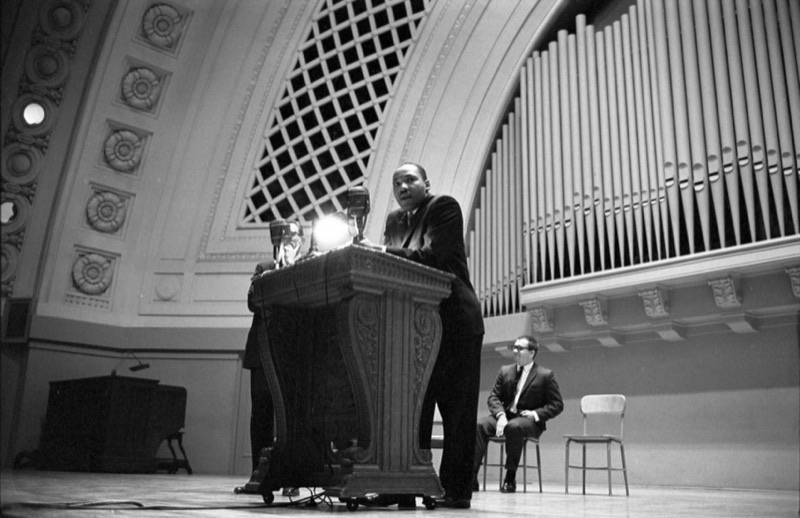
Ann Arbor, Michigan,
Dr. King at the podium on the stage of Hill Auditorium at the University of Michigan.
Photo: University of Michigan Media Resources Center. Bentley Historical Library, University of Michigan (HS2295). © Regents of the University of Michigan, CC BY 4.0 (creativecommons.org/licenses/by/4.0/).
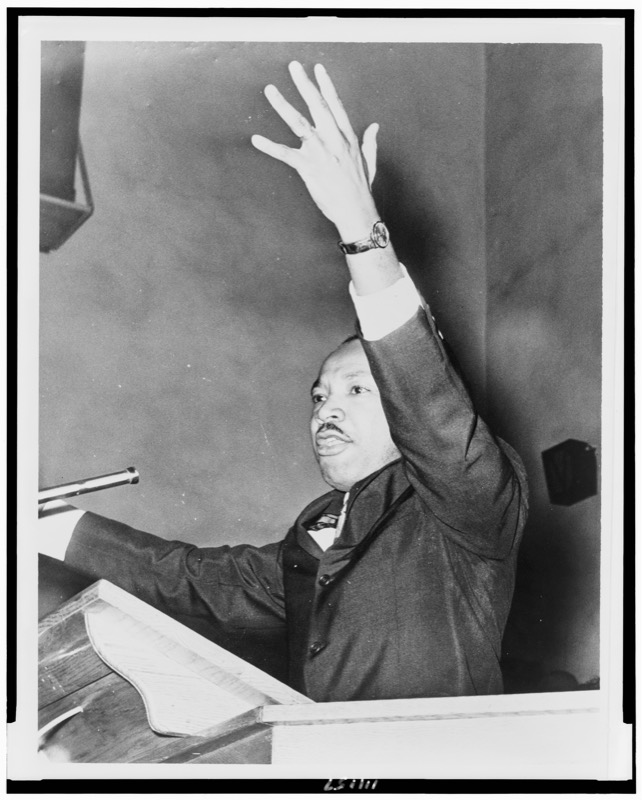
Washington Temple Church,
Dr. King raises his arm as he speaks at a freedom rally.
Photo: O. Fernandez, New York World-Telegram & Sun. Library of Congress, Prints & Photographs Division, NYWT&S Collection, LC-USZ62-111157.
Act II
The movement
From the White House to Birmingham, the National Mall and the signing of the Civil Rights Act.
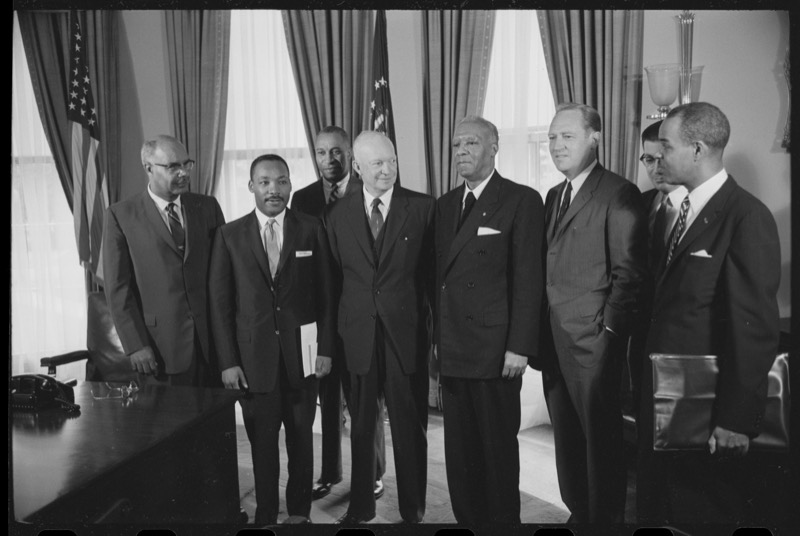
The White House,
Dr. King, second from left, meets President Dwight D. Eisenhower with Lester B. Granger, A. Philip Randolph and Roy Wilkins.
Warren K. Leffler, photographer. Library of Congress, Prints & Photographs Division, U.S. News & World Report Magazine Collection, LC-DIG-ppmsca-78007.
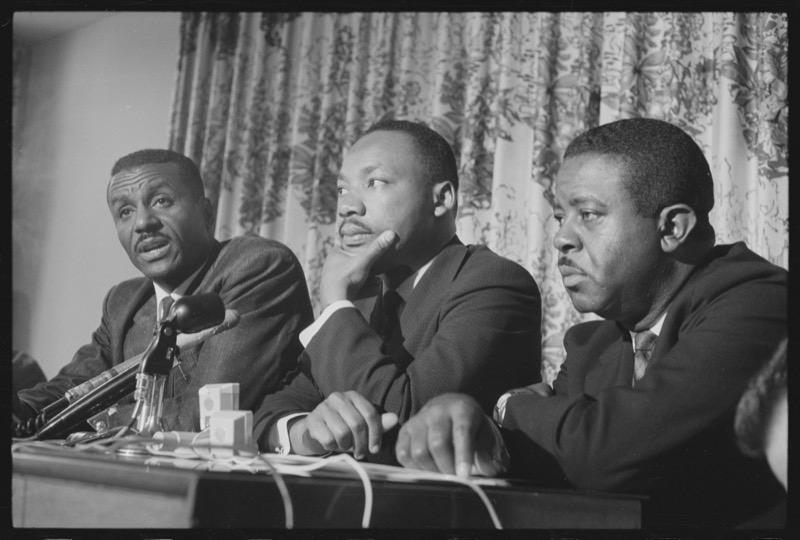
Birmingham, Alabama,
Rev. Fred Shuttlesworth, Dr. King and Rev. Ralph Abernathy face the press during the Birmingham Campaign.
Marion S. Trikosko, photographer. Library of Congress, Prints & Photographs Division, U.S. News & World Report Magazine Collection, LC-DIG-ppmsca-72947.
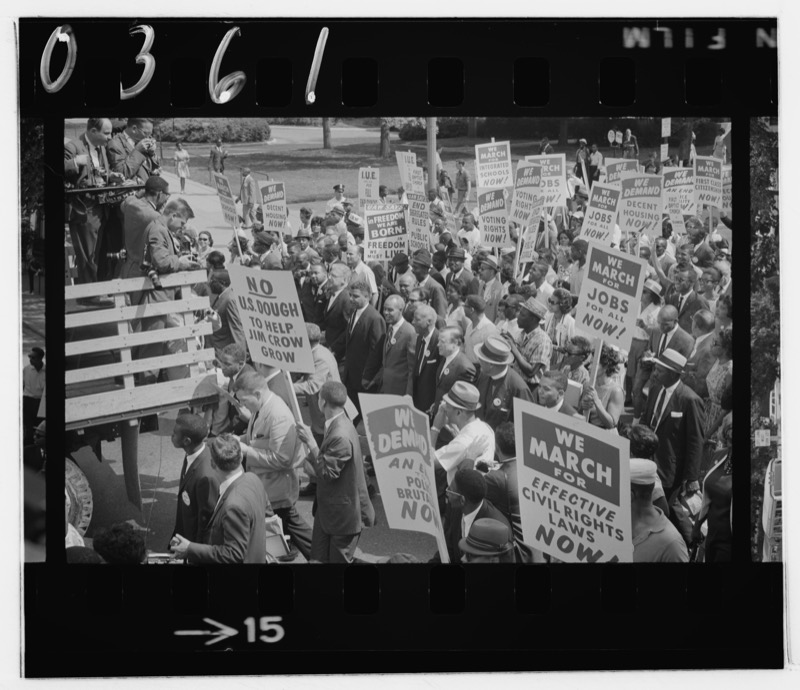
Washington, D.C.,
Dr. King marches among civil rights leaders and crowds carrying signs at the March on Washington.
Warren K. Leffler, photographer. Library of Congress, Prints & Photographs Division, U.S. News & World Report Magazine Collection, LC-DIG-ppmsca-04297.
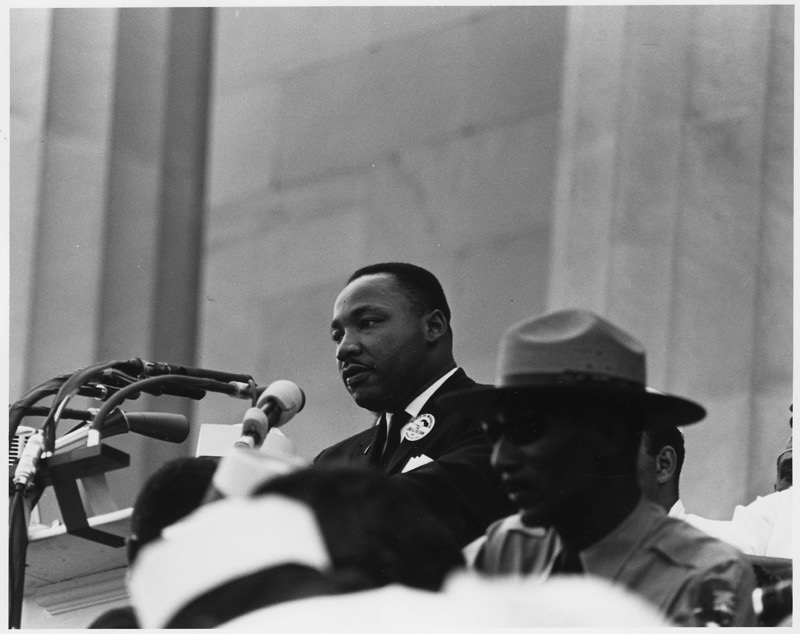
Washington, D.C.,
Dr. King speaks at the March on Washington for Jobs and Freedom.
Photo by Rowland Scherman, U.S. Information Agency. National Archives and Records Administration (NAID 542068).
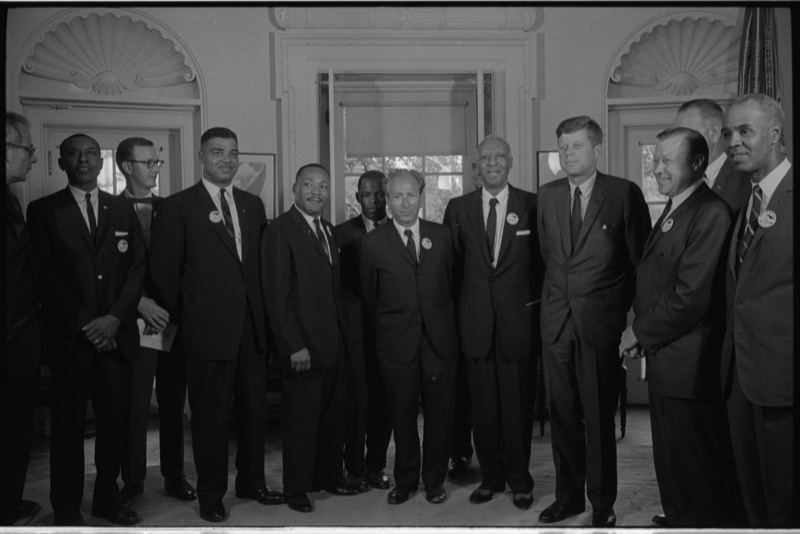
The Oval Office, The White House,
After the march, Dr. King and the march leaders meet President John F. Kennedy.
Warren K. Leffler, photographer. Library of Congress, Prints & Photographs Division, U.S. News & World Report Magazine Collection, LC-DIG-ds-04413.
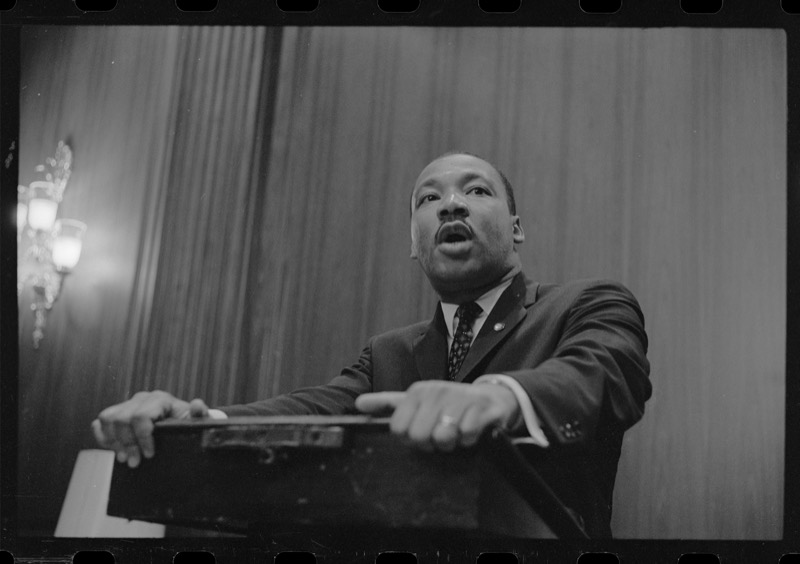
U.S. Capitol, Washington, D.C.,
Dr. King speaks at a press conference about the Senate debate on the Civil Rights Act of 1964.
Marion S. Trikosko, photographer. Library of Congress, Prints & Photographs Division, U.S. News & World Report Magazine Collection, LC-DIG-ppmsca-41615.
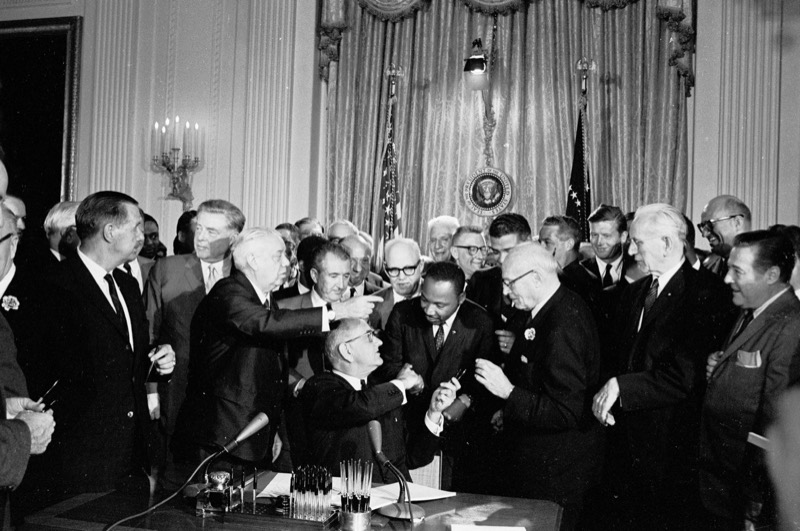
East Room, The White House,
At the signing of the Civil Rights Act, President Lyndon B. Johnson hands Dr. King a signing pen.
LBJ Library photo by Cecil Stoughton.
Act III
Baton Rouge
The city that went first in 1953, the students who took a seat in 1960, and the education that carries it forward.
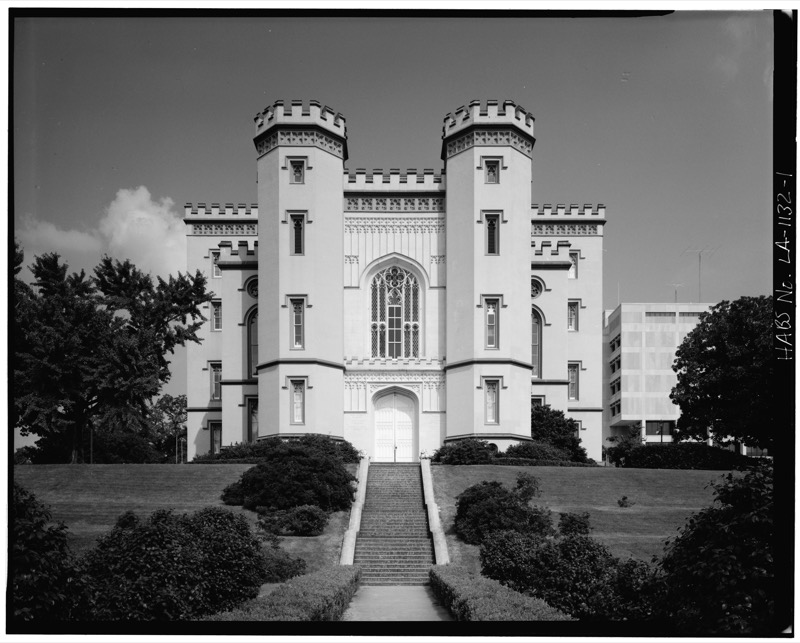
Baton Rouge, Louisiana,
The west front of the Old State Capitol, photographed for the Historic American Buildings Survey.
Library of Congress, Prints & Photographs Division, HABS LA,17-BATRO,6-1 (photograph by David J. Kaminsky, 1978).
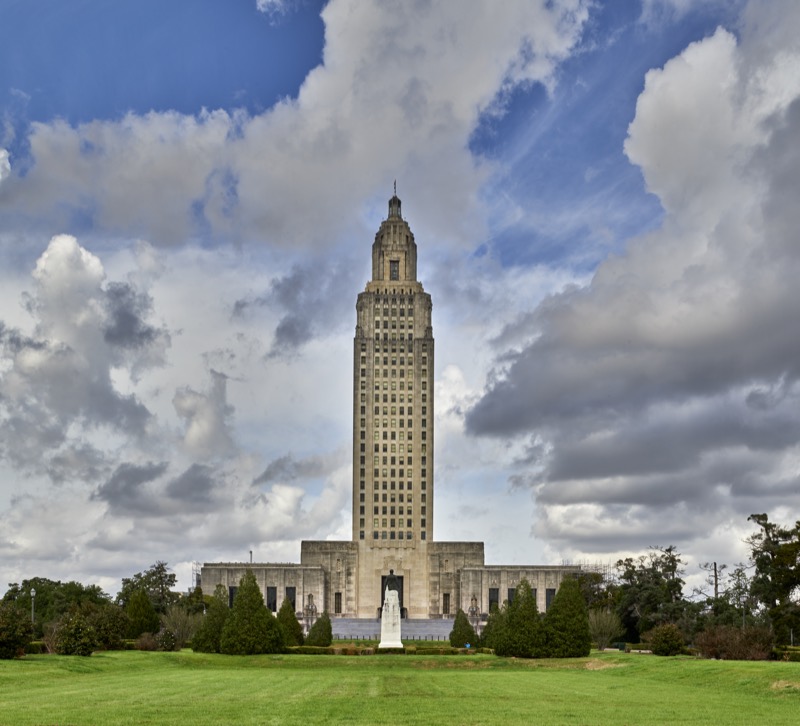
Baton Rouge, Louisiana,
The Louisiana State Capitol, completed in 1931.
Library of Congress, Prints & Photographs Division, photograph by Carol M. Highsmith [LC-DIG-highsm-67732].
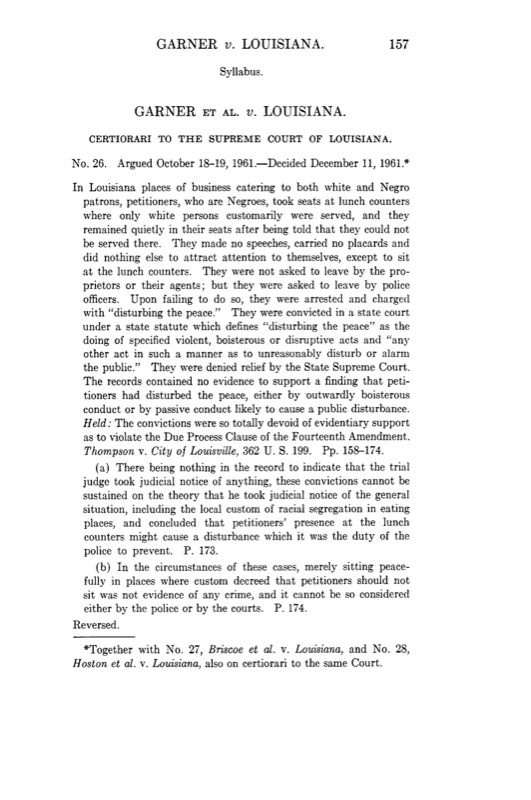
Supreme Court of the United States,
In Garner v. Louisiana, the Court reversed the convictions of Baton Rouge sit-in demonstrators, among them Southern University students, arrested in 1960.
Garner v. Louisiana, 368 U.S. 157 (1961). United States Reports, Library of Congress Law Library.
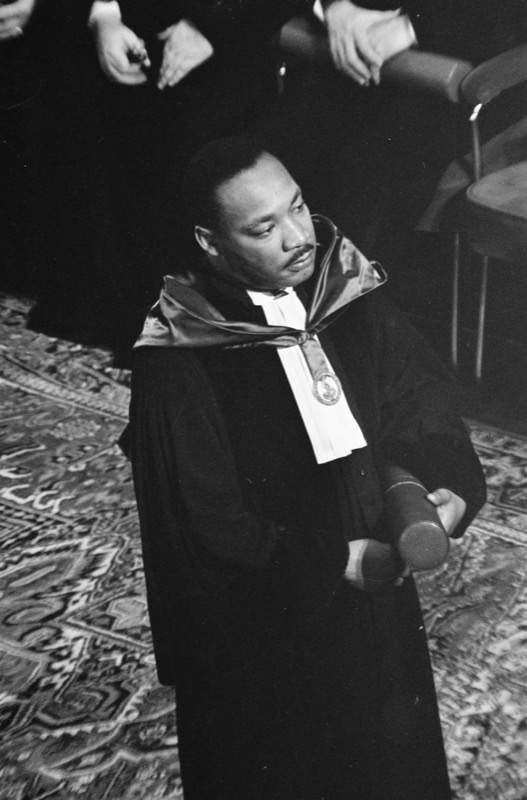
Concertgebouw, Amsterdam,
Dr. King, wearing the hood of an honorary doctorate in the social sciences from the Vrije Universiteit, holds his diploma.
Photo: Anefo (photographer unknown). Nationaal Archief, CC0 (2.24.01.05, inv. 918-3380).
A Legacy of Opportunity
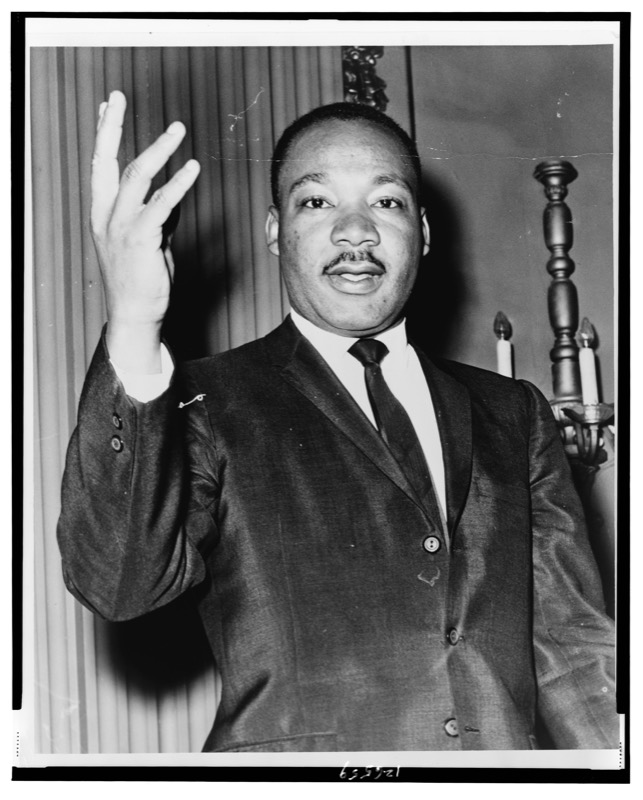
Dr. Martin Luther King Jr.
Dick DeMarsico, photographer. Library of Congress, Prints and Photographs Division, NYWT&S Collection, LC-USZ62-126559.
Why we gather
BRCC and UCFM are joining in a shared belief: education transforms lives, opportunity strengthens communities, and service inspires change.
The celebration builds on UCFM’s longstanding tradition of honoring Dr. King through social justice, community service, and student scholarships, and on BRCC’s commitment to educational access, workforce development, and economic opportunity.
January 16, 2027
Take your place in the story.
Baton Rouge gathers again to help fund the next generation of scholars.